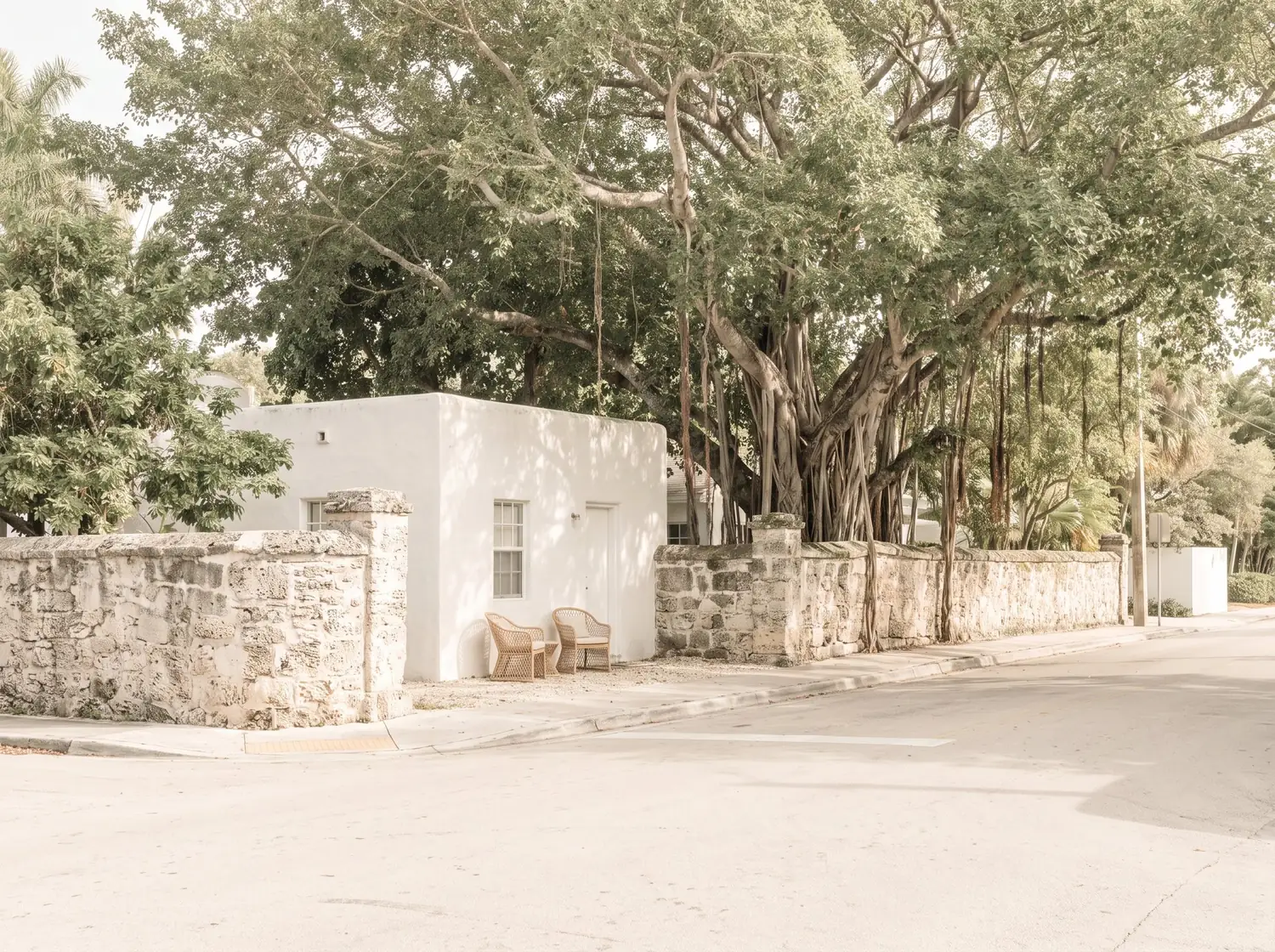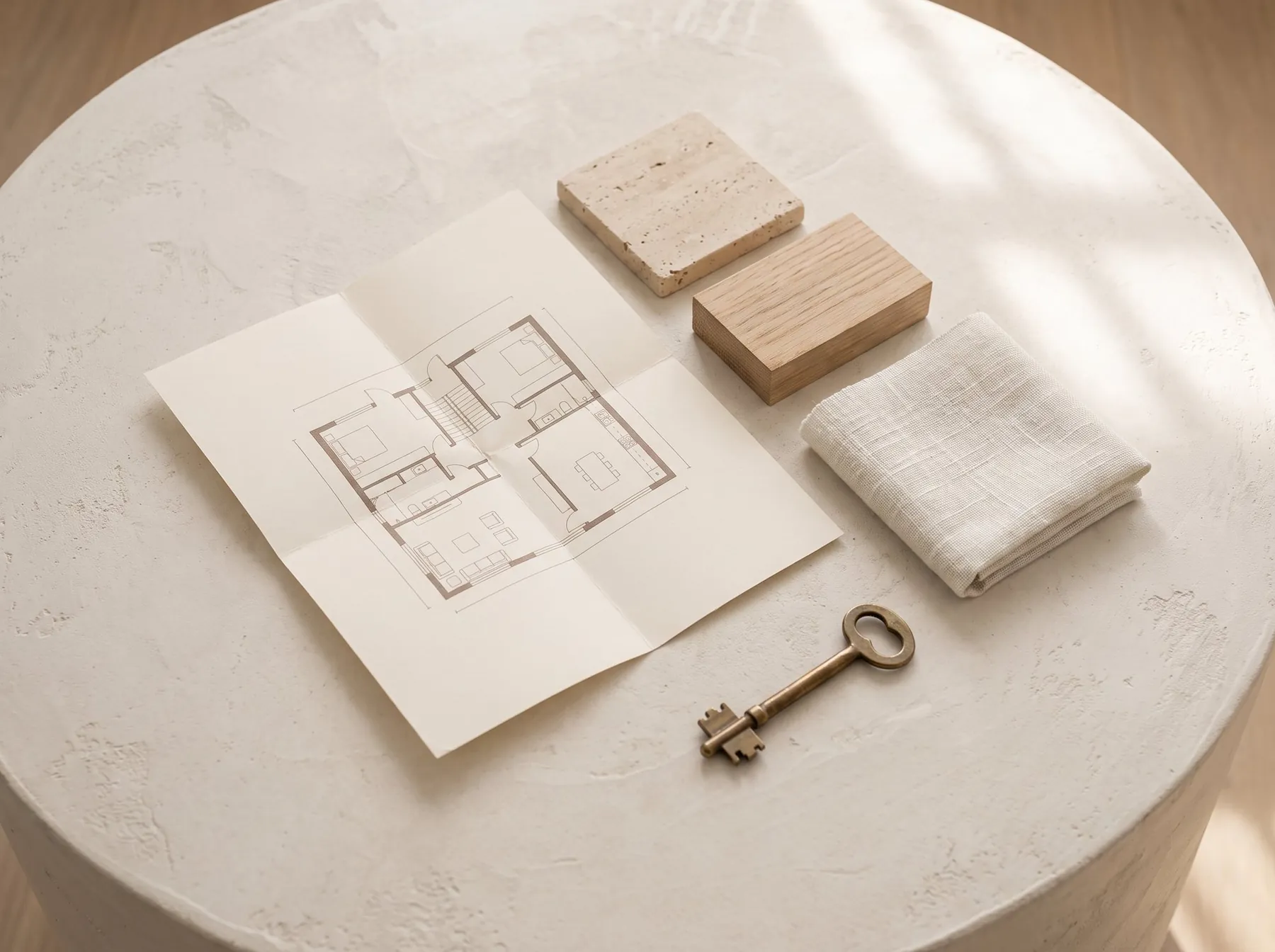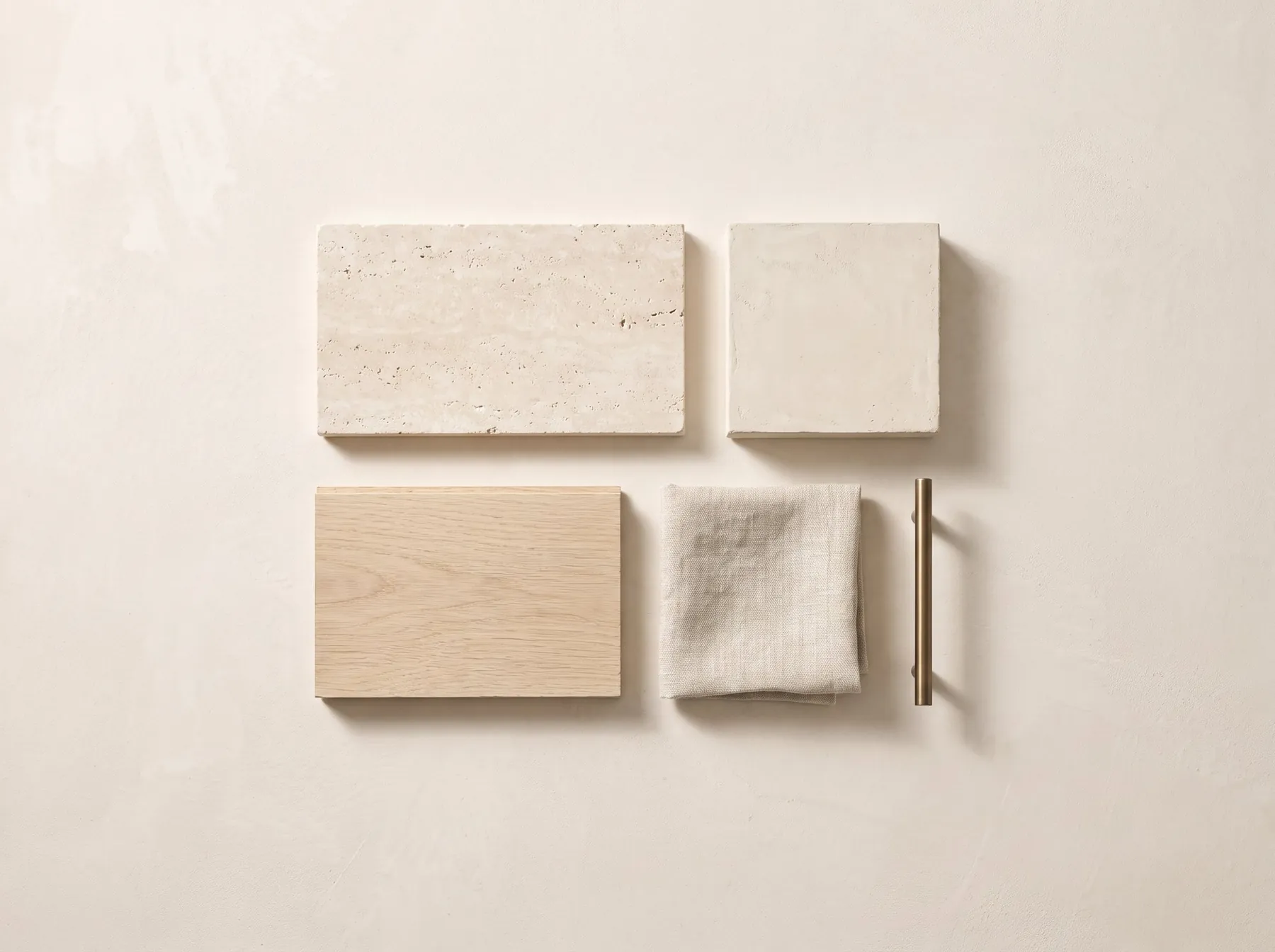
Every Loggia building uses the same short list of materials. Not because we lack imagination, but because we have tested them in this climate for fifteen years and know how they age. Here is what is in the materials library at the sales gallery, and why.
Honed travertine
Travertine runs through every home, from the front door to the edge of the loggia. Inside and out are the same stone, so when the glass slides open the floor carries straight through and the room doubles in size.
We use a honed finish rather than polished. It is softer underfoot, it does not show sand, and it stays cool in August. Small marks and pores are part of the stone; after a few years it looks better than on the day it was laid.
Solid oak
Kitchens, wardrobes and doors are solid white oak with a matt oil finish. Veneer looks the same in a showroom, but it cannot be sanded and repaired after ten years of sun through a south-facing window. Solid oak can.
Lime plaster
The walls are finished in lime plaster rather than paint. Lime is breathable, so it handles Miami humidity without trapping moisture, and it has a soft, uneven depth that changes with the light through the day.
Choose materials for the tenth year, not the first day.
Limestone outside
The facades and loggia frames are a pale limestone, chosen to reflect heat rather than store it. It weathers slowly to a warmer tone, which is why Palm Court, completed in 2025, already looks like it has always been there.
What you can choose
Buyers who reserve early can choose between two oak tones and two travertine finishes, and between brushed brass and stainless steel fittings. Everything else is fixed, so that every home in the building feels like it belongs to the same family.
The materials library is open at the sales gallery every day. Bring a photo of a room you love and we will show you what works with it.